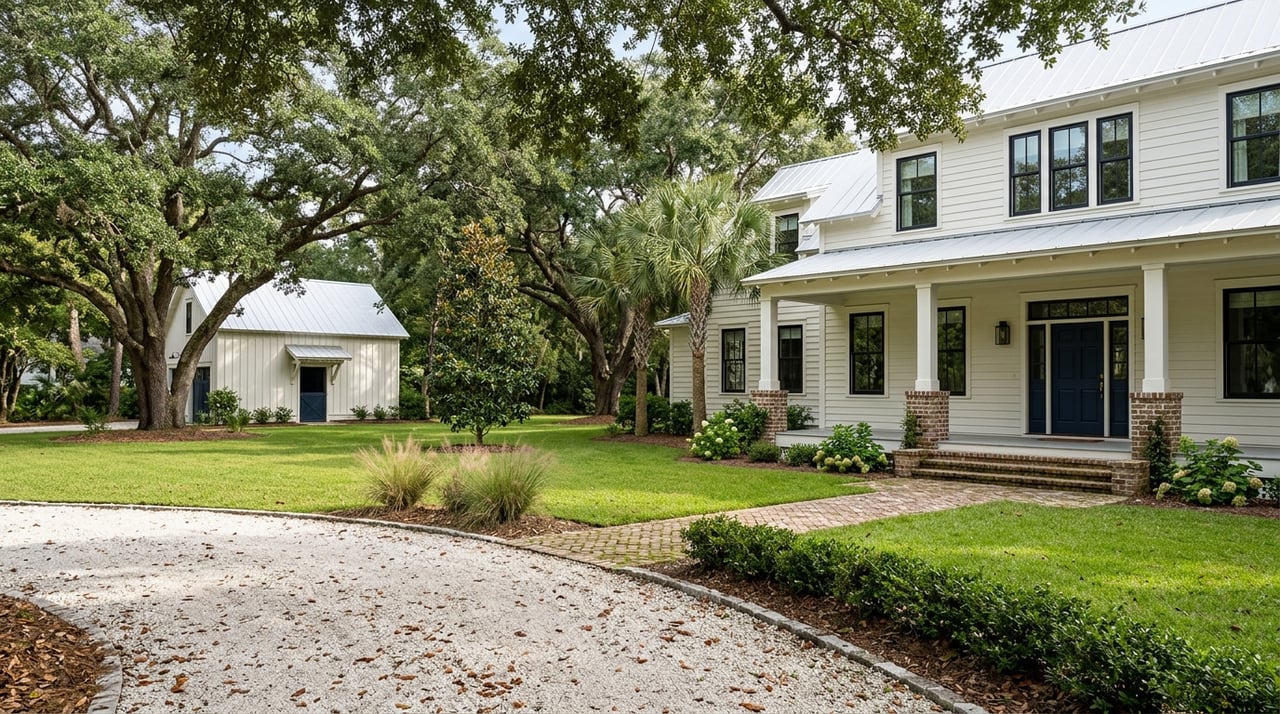
If you are shopping for estate property or acreage near Charleston, Johns Island probably stands out fast. It offers a rare mix of larger parcels, rural character, and proximity to the city, but buying land here is not as simple as comparing lot sizes. The right purchase depends on zoning, utilities, environmental constraints, and access, so understanding those details early can help you buy with more confidence. Let’s dive in.
Why Johns Island attracts acreage buyers
Johns Island is shaped by long-term planning that aims to preserve rural character, agricultural use, and natural resources while directing growth toward areas with infrastructure. That planning framework is a big reason the island still feels distinct from more suburban parts of the Charleston area.
On the City side of Johns Island, the 2024 population estimate reached 14,208, up from 11,884 in the 2020 Census. Local planning documents tie much of that increase to new residential construction, which means buyers are entering a market where growth is active but land-use rules still matter.
The island’s road network also helps explain its appeal. Bohicket Road and River Road are designated scenic roads, and Charleston County notes that Bohicket Road was the first state-legislatively designated scenic highway in South Carolina. Tree-protection rules in the right-of-way support the natural setting that many estate buyers value.
Why gross acreage can mislead you
Acreage listings can look straightforward on paper, but gross parcel size does not always equal usable land. On Johns Island, wetlands, floodplain, drainage areas, and coastal regulations can reduce what you can actually build or improve.
A local example makes that clear. Charleston County reports that the Kiawah River project spans 1,427 acres, but only 1,083 acres are highland, with 187 acres of freshwater wetlands and 157 acres in the OCRM Critical Line Area. For buyers, that is a practical reminder to focus on usable acreage, not just the headline number.
This is why two properties with similar total acreage can offer very different outcomes. One tract may support a residence, barn, and guest space more easily, while another may carry tighter limits because of site conditions or regulatory review.
Johns Island zoning matters more than you think
Johns Island is not governed by one simple zoning pattern. Parcel rules can vary based on base zoning, corridor overlays, and whether the property is in the city or unincorporated county.
For buyers, that means your plans for a property should be checked against the exact parcel, not assumed from a nearby listing or the general feel of the area. This is especially important if you want a private compound, hobby farm setup, detached workshop, or future guest space.
Main Road Corridor Overlay
Charleston County adopted the Main Road Corridor Overlay Zoning District because development in that corridor ranges from rural and agricultural-residential uses to more intensive commercial and industrial development. The overlay applies to unincorporated parcels along Main Road and Kitford Road.
It includes four districts: Belvedere-Main Commercial, Rural Commercial, Kitford Community Industrial, and Kitford Community Residential. The county specifically says the Kitford Community Residential area is intended to preserve the rural residential community and is subject to rural residential densities.
Maybank Highway Corridor Overlay
Maybank Highway is another corridor buyers should watch closely. Charleston County revised the Johns Island Maybank Highway Corridor Overlay to address traffic safety, infrastructure deficiencies, visual character, and stormwater runoff, drainage, and flooding while keeping county and city rules aligned.
If a parcel is near Maybank Highway, the overlay may shape what improvements are possible and how the property feels over time. It can also affect the balance between convenience and privacy, depending on where the tract sits.
Agricultural zoning and estate-style improvements
For acreage buyers, agricultural zoning can create meaningful flexibility. Charleston County says accessory structures are allowed without a principal structure in agricultural zoning districts, and barns and farm-related structures are allowed in agricultural districts even if the parcel does not contain a primary structure.
The county also allows accessory dwelling units in agricultural and residential districts, subject to size and other standards. In practical terms, that can make certain larger tracts more suitable for barns, workshops, storage buildings, guest space, and similar estate-style improvements than a typical suburban homesite.
Utilities are parcel-specific
One of the biggest mistakes acreage buyers can make is assuming public utilities are available. On Johns Island, utility service is highly parcel-specific.
Charleston Water System says it provides direct retail sewer service only in parts of Johns Island within the urban growth boundary. It asks applicants to request a service-availability letter for new development, which makes early verification essential.
Some tracts may depend on septic systems, wells, or both, subject to state requirements. If you are evaluating land for a custom home or compound, utility feasibility should be part of your earliest due diligence, not an afterthought.
Flood, stormwater, and coastal review can shape value
On Johns Island, environmental review is not a minor detail. It is often central to whether a parcel can support the improvements you want and how much time and cost may be involved.
Charleston County classifies unincorporated Johns Island as a Stormwater Special Protection Area. The county requires a stormwater permit for land disturbance over 5,000 square feet, which can affect everything from driveway placement to home siting and grading.
The City of Charleston’s Johns Island Restoration Plan also highlights drainage basins such as Penny’s Creek and Church Creek and recommends riparian buffers for drainage paths serving more than 100 acres. For buyers, this reinforces how site design on larger parcels may need to account for drainage patterns and buffer considerations.
If a parcel is near marshes, tidal creeks, or the critical line, state coastal review and critical-area line determination may also apply. These are often the most visually appealing tracts, but they can also be the most regulated.
Infrastructure changes are part of the story
Johns Island’s appeal is tied to space and character, but buyers should also understand that transportation improvements are ongoing. This matters both for day-to-day convenience and for how certain corridors may evolve.
Charleston County is designing a widening of Maybank Highway from River Road to the Stono River Bridge. The project is planned to create a four-lane roadway with turn lanes and bike and pedestrian improvements.
SCDOT also announced a bridge replacement project on Bohicket Road in April 2026. In practical terms, buyers should expect continued infrastructure investment along with potential construction timing, detours, and temporary corridor disruptions.
What this means for long-term value
For estate and acreage purchases on Johns Island, value is driven by more than privacy or total land size. Local planning, corridor overlays, utility access, and environmental constraints all influence how a parcel functions over time.
Parcels closer to Maybank Highway, Main Road, or bridge corridors may feel the effects of infrastructure upgrades and corridor rules more directly. Larger rural tracts farther from those gateways may trade more on privacy, conservation value, and land usability.
New housing activity also adds context. The City estimated 2,331 persons from new residential construction on Johns Island between 2020 and 2023, and permit records show 2,891 single-family permits issued on Johns Island from 2014 through 2023. That level of growth helps explain why access, infrastructure, and future land-use controls deserve close attention.
A smart due diligence checklist
Before you move forward on a Johns Island acreage purchase, make sure you confirm the basics that most affect usability and long-term value.
- Confirm the base zoning and any overlay district affecting the parcel.
- Check whether the property is on the City side of the urban growth boundary or may be eligible for annexation.
- Verify sewer and water availability before assuming public utility service.
- Review wetlands, floodplain, critical-line, and stormwater constraints before planning improvements.
- If you want a barn, hobby farm, workshop, or similar outbuilding, confirm whether agricultural zoning supports that use.
- Ask how nearby road and bridge projects may affect access, travel patterns, or the ownership experience.
Buying acreage on Johns Island with clarity
Johns Island remains one of the Charleston area’s most compelling places to buy estate property or acreage because it offers something increasingly hard to find: room to breathe near the coast. At the same time, the best opportunities usually go to buyers who look beyond the listing photos and understand the parcel at a deeper level.
When you evaluate zoning, utilities, environmental constraints, and access together, you can make a much more informed decision about what a property truly offers. If you are exploring estate homes, private compounds, or land opportunities on Johns Island, Key Avenue Group can help you navigate the details with a high-touch, locally informed approach.
FAQs
What should buyers know about Johns Island acreage before making an offer?
- You should verify usable acreage, zoning, overlays, utility availability, access, and environmental constraints before assuming a parcel will support your plans.
How does zoning affect estate properties on Johns Island?
- Zoning can determine whether a parcel supports features like barns, farm structures, accessory dwelling units, and other estate-style improvements, especially in agricultural districts.
Why is usable acreage more important than gross acreage on Johns Island?
- Wetlands, floodplain areas, drainage features, and coastal regulations can reduce the buildable portion of a tract, so total acreage alone does not tell the full story.
Are public sewer and water available for all Johns Island land?
- No. Charleston Water System says direct retail sewer service is available only in parts of Johns Island within the urban growth boundary, so service should be confirmed for each parcel.
Do Johns Island properties near marshes or creeks face extra review?
- Yes. Parcels near marshes, tidal creeks, or the critical line may require state coastal review and critical-area line determination, in addition to local stormwater review.
How do road projects affect Johns Island real estate decisions?
- Transportation projects such as the Maybank Highway widening and Bohicket Road bridge work can influence access, traffic patterns, and the day-to-day ownership experience in certain areas.