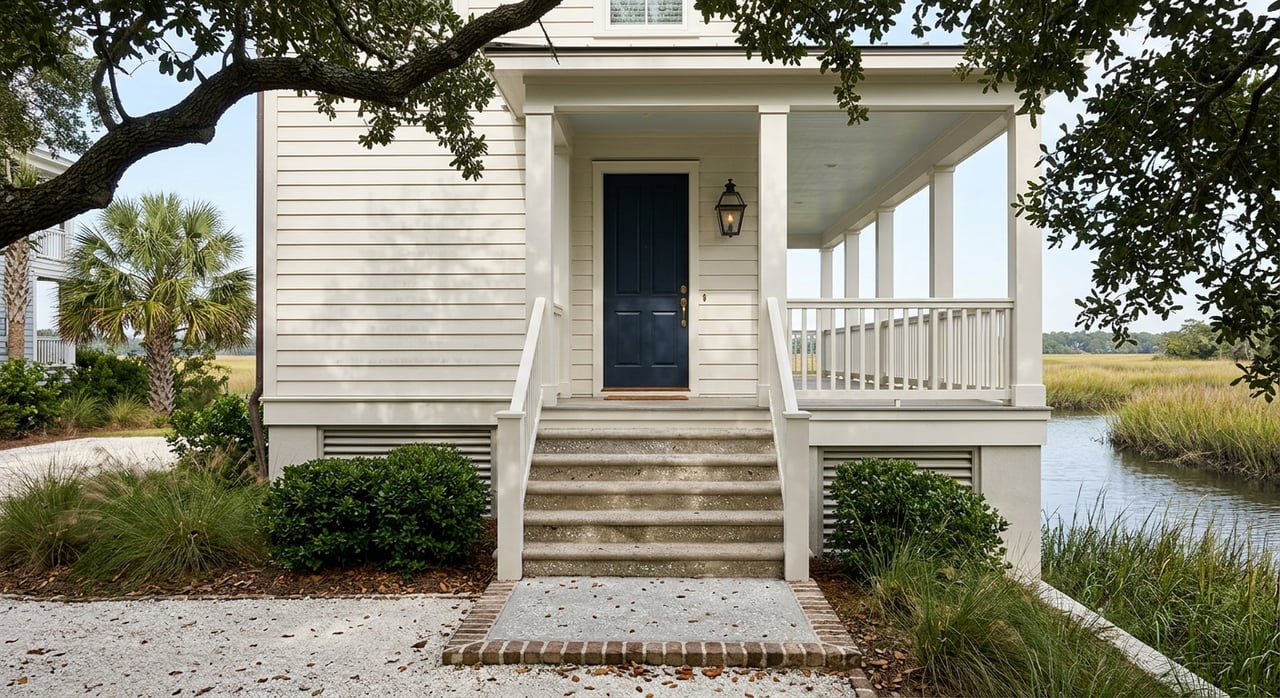
If you picture Charleston waterfront living as one simple category, you could miss the mark by a mile. In this market, “waterfront” can mean a harbor-front downtown residence, a planned riverfront community on Daniel Island, a creekside address in Mount Pleasant, or a beach-first home on one of the barrier islands. Understanding those differences helps you focus on the lifestyle, access, and price point that actually fit your goals. Let’s dive in.
Charleston waterfront is not one market
Charleston’s broader housing market provides a helpful starting point, but waterfront living sits in a very different lane. In April 2026, CTAR reported 5,342 homes for sale, 3.4 months of supply, and a median sales price of $433,000. Redfin’s March 2026 data put the Charleston citywide median sale price at $685,000.
Waterfront-focused submarkets trend much higher than those benchmarks. Broad March 2026 median sale prices ranged from about $880,000 in Mount Pleasant to $5.9 million on Sullivan’s Island. These figures are submarket medians, not waterfront-only comps, but they show how quickly pricing can rise once you move toward Charleston’s most desirable water-oriented areas.
Downtown Charleston waterfront living
Downtown Charleston offers a more urban version of waterfront life. Here, the appeal is tied to Charleston Harbor, riverfront settings, walkability, and quick access to restaurants, retail, and the historic core rather than a beach-centered routine.
Waterfront Park helps define that experience. The city describes it as an eight-acre linear park and pier along the harbor, near the historic district and King Street. If you want to be near water without giving up an active, in-town lifestyle, downtown stands out.
Boating access downtown
For boat owners, the Maritime Center is a major advantage. It is a deep-water marina that can accommodate boats up to 120 feet and offers dockage without bridge restrictions.
That detail matters if you want immediate harbor access or own a larger vessel. In practical terms, downtown can make boating easier for owners who value direct water access without the constraints found in other areas.
Downtown pricing and pace
Downtown Charleston’s March 2026 median sale price was $1.2295 million. Homes averaged 62 days on market.
That places downtown firmly in Charleston’s upper tier while still offering a very distinct value proposition. You are not just paying for water views or marina access. You are also buying into a walkable urban setting with a strong sense of place.
Flood considerations downtown
Flood risk is an important part of the downtown conversation. The City of Charleston says flooding and sea level rise are becoming more frequent and reports 13 inches of sea level rise over the last 100 years.
The city’s Water Plan is intended to manage flood risks from tides, sea level rise, stormwater, storm surge, and groundwater. For buyers, the key takeaway is simple: flood exposure should be reviewed at the property level, not assumed based on a general area.
Daniel Island riverfront lifestyle
Daniel Island offers a very different waterfront experience from downtown. Instead of an urban harbor setting, it is known for planned riverfront living, open space, and a community design that integrates waterfront access into everyday life.
The city-owned Daniel Island Waterfront Park sits on the Wando River and includes trails and a fishing pier. The Daniel Island planned development also requires substantial open space and publicly accessible waterfront portions along the Wando River frontage.
What makes Daniel Island distinct
Daniel Island feels like a middle ground between urban waterfront and barrier-island luxury. The riverfront is part of the broader community fabric, not limited to a small number of marquee homes.
That can appeal to buyers who want a polished coastal setting with waterfront character woven into daily routines. You may not be choosing Daniel Island for surf and sand, but you are choosing it for scenic open space, riverfront amenities, and a highly intentional layout.
Daniel Island pricing
Daniel Island’s broad March 2026 median sale price was $1.507 million. Some pockets rise far above that, with Redfin reporting Daniel Island Park at about $2.477 million.
This is why broad averages only tell part of the story. On Daniel Island, your price point can change quickly depending on exact location, lot position, and proximity to the most desirable riverfront or golf-adjacent sections.
Mount Pleasant waterfront options
Mount Pleasant has one of the widest ranges of waterfront-adjacent living in the Charleston area. It combines a broader suburban housing base with distinct harbor-edge, creekside, and marina-oriented pockets.
The town’s Memorial Waterfront Park sits beneath the Ravenel Bridge and includes a 1,250-foot pier. Phase II was designed to add floating docks and potential water-taxi use, which reflects how Mount Pleasant blends public waterfront amenities with everyday convenience.
Shem Creek and waterfront character
The town also notes that Shem Creek has long been a maritime hub and remains a waterfront destination. That gives Mount Pleasant a different feel from Daniel Island or downtown.
Here, the waterfront story is not just about views. It is also about creek activity, boating culture, and established neighborhoods where water access and proximity can carry a substantial premium.
Mount Pleasant pricing by area
Mount Pleasant’s citywide March 2026 median sale price was $880,000. But that broad number moves sharply upward in waterfront-adjacent neighborhoods.
Redfin shows Hobcaw Point around $2.545 million and I’On around $2.422 million. For buyers, this is a good reminder that Mount Pleasant is not one single price point. Waterfront premiums show up quickly in its most established harbor- and creek-oriented areas.
Market pace in Mount Pleasant
In March 2026, homes in Mount Pleasant averaged 56 days on market. That pace suggests a market that can move steadily while still containing very different micro-markets depending on location and home type.
Barrier islands: beach-first living
If downtown, Daniel Island, and Mount Pleasant offer water-connected lifestyles, the barrier islands deliver a more beach-centered version of Charleston waterfront living. They are also the most differentiated submarkets in the region.
For some buyers, that distinction is everything. If your ideal day starts with sand underfoot, ocean views, or quick boat access from a marina, the islands deserve close attention.
Isle of Palms: marina and beach access
Isle of Palms is especially attractive if you want both beach access and straightforward boating logistics. The city marina sits at Morgan Creek and the Atlantic Intracoastal Waterway, with slips, a double-wide public boat ramp, and a public dock.
That marina setup makes Isle of Palms stand out among Charleston’s barrier islands. It supports a lifestyle that combines saltwater recreation, boating convenience, and a classic beach-home setting.
Isle of Palms had a March 2026 median sale price of $1.475 million, and homes averaged 50 days on market. It is clearly a luxury beach market, but not the most expensive island option in the area.
Sullivan’s Island: high-end beach market
Sullivan’s Island is more strictly beach-access oriented. The town highlights numerous public beach access paths and boardwalks, along with ADA matting and beach wheelchairs.
The town also prohibits vehicles or golf carts from blocking beach paths, which reinforces how central beach access is to daily life there. If your top priority is direct connection to the shoreline, Sullivan’s Island operates in a category of its own.
Its March 2026 median sale price was $5.9 million, with only 6 homes sold. That low sales volume means median pricing can swing sharply, but it also underscores Sullivan’s Island’s position as a high-end, low-inventory market.
Folly Beach: more casual, slower-moving
Folly Beach has a more casual and mixed-use feel, but it remains a clear waterfront submarket. The town says there is beach access at the end of every block, and Folly Beach County Park offers 2,500 feet of ocean frontage plus 200 feet of river frontage.
The pier extends more than 1,049 feet into the Atlantic, adding another defining waterfront feature. For buyers, Folly often feels less formal than some other island markets while still offering a strong beach-and-water identity.
Folly Beach’s March 2026 median sale price was about $1.099 million, and homes averaged 162 days on market. That slower pace can create a different negotiation environment than you may find in faster-moving island or in-town submarkets.
How to compare downtown and the islands
The smartest way to compare Charleston waterfront options is to start with how you want to live, not just what you want to buy. A downtown residence, a Daniel Island home, a Mount Pleasant creekside property, and a barrier-island retreat can all be “waterfront,” but they serve very different priorities.
Here are a few useful ways to frame the decision:
- Choose downtown if you want harbor access, deep-water marina convenience, and a walkable urban setting.
- Choose Daniel Island if you want planned riverfront living, open space, and waterfront amenities integrated into the community.
- Choose Mount Pleasant if you want a wider range of neighborhoods with access to harbor, creek, and maritime destinations.
- Choose the barrier islands if beach access, marina access, or an ocean-oriented routine matter most.
Due diligence matters on every waterfront home
No matter which area fits your lifestyle, due diligence becomes even more important when water is part of the equation. The biggest question is not simply whether a home is waterfront, but what kind of waterfront it offers.
A harbor-front condo, a creekside home, a riverfront property, and an ocean-adjacent residence can each come with different daily advantages and practical considerations. That is why comparing access, setting, market pace, and location-specific details matters as much as comparing square footage.
Verify flood zones by address
Flood-zone review should be handled at the address level. FEMA notes that areas beginning with A or V on a flood map are high-risk zones, and Charleston County plus the City of Charleston provide floodplain information and flood-zone determination resources.
In a waterfront market, insurance, elevation, and lender requirements can vary from one block to the next. Making assumptions based on a neighborhood name alone can lead to costly surprises.
Know that market pace varies
Charleston waterfront submarkets do not move at the same speed. In the latest comparable data, Downtown Charleston averaged 62 days on market, Mount Pleasant 56, Isle of Palms 50, Sullivan’s Island about 81, and Folly Beach 162.
Those differences help explain why some homes feel like faster-moving lifestyle purchases while others trade more like longer-term luxury assets. If you are buying or selling in one of these areas, pricing strategy and timing should reflect the specific submarket, not the broader Charleston average.
Charleston waterfront living works best when your home matches the life you actually want to lead. Whether you are drawn to downtown harbor access, Daniel Island’s riverfront planning, Mount Pleasant’s maritime pockets, or the beach-first appeal of the islands, a clear understanding of each submarket can help you buy with confidence or position your property more effectively for sale. If you are ready for private guidance tailored to Charleston’s coastal micro-markets, Key Avenue Group can help you request a private tour or get your complimentary home valuation.
FAQs
What does waterfront living in Downtown Charleston usually mean?
- Downtown Charleston waterfront living usually means harbor-front or riverfront access, walkability, and proximity to restaurants, retail, and the historic district rather than a beach-centered setting.
How is Daniel Island waterfront living different from Downtown Charleston?
- Daniel Island is more focused on planned riverfront living, open space, trails, and publicly accessible waterfront areas along the Wando River, while downtown offers a more urban harbor-oriented experience.
Are Mount Pleasant waterfront homes all priced the same?
- No. Mount Pleasant’s broad median sale price was $880,000 in March 2026, but waterfront-adjacent neighborhoods like Hobcaw Point and I’On were much higher.
Which Charleston island is best for boating access?
- Isle of Palms stands out for boating because its marina sits at Morgan Creek and the Atlantic Intracoastal Waterway and includes slips, a public dock, and a double-wide public boat ramp.
Why is flood-zone research important for Charleston waterfront homes?
- Flood-zone research is important because flood exposure, insurance needs, elevation issues, and lender requirements can vary by specific address, even within the same general area.
How fast do Charleston waterfront homes usually sell?
- It depends on the submarket. Recent data showed average days on market of about 50 on Isle of Palms, 56 in Mount Pleasant, 62 in Downtown Charleston, around 81 on Sullivan’s Island, and 162 on Folly Beach.